Insights from CHERRIES General Assembly #2

16-18 June 2020. CHERRIES team gathered online for its second General Assembly.

After six months from the kick off meeting held in Vienna last January, consortium partners took this opportunity to take stock of the activities carried out so far and to plan the next steps.

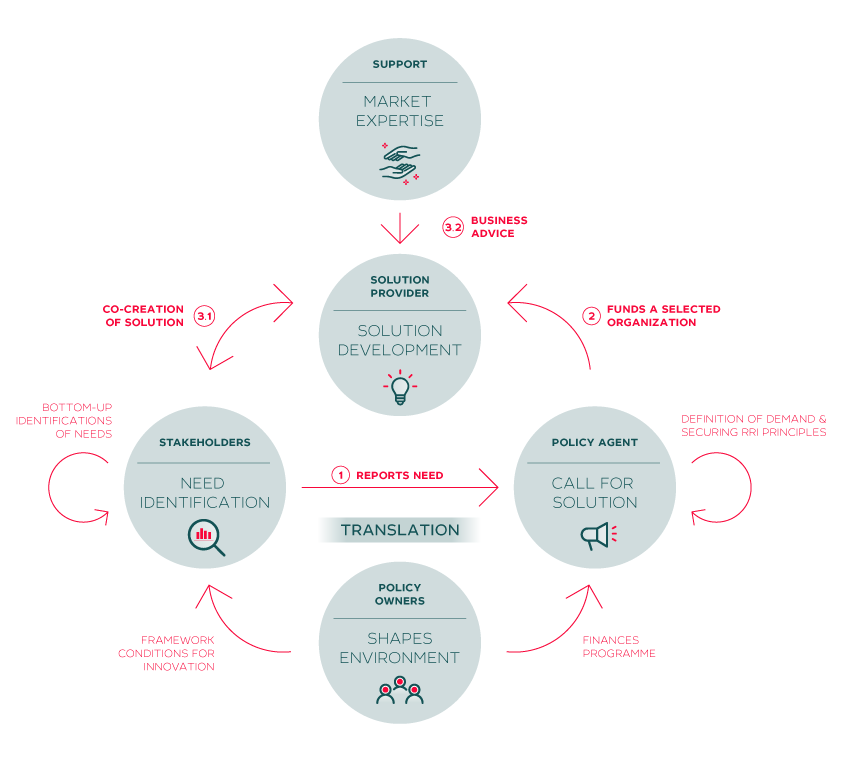
CHERRIES | Constructing Healthcare Environments through Responsible Research Innovation and Entrepreneurship is an EU funded project aimed at enabling Responsible, Research and Innovation  policy experiments in the healthcare sector in three European territories – in Murcia (ES)Örebro (SE) and the Republic of Cyprus (CY).

As you can imagine, working with stakeholders of the healthcare sector in the last few months has not been so easy as they were fully absorbed by the COVID-19 pandemic.

Nevertheless, partners turned this challenge into an opportunity, using those months to go deeper in the regional mapping exercises that the colleagues from University of Leiden are leading. You’ll read soon about the state of the art of CHERRIES mapping process, which is looking at the relevant regional stakeholders and policies in the healthcare sector (a dedicated news will be released in the coming days).

At the same time, partners have been working on the definition of the pilot procedures and supporting documents by looking at existing good practices and materials that could inform the CHERRIES methodology. K&I and CYRIC are working together with the other regional partners (in Cyprus, Murcia and Orebro) to get ready for the launch of the regional call for needs in early autumn.

After the summer break the three regions will call healthcare stakeholders to join dedicated awareness raising and training events that will kick-start the activities in and with the territories.

Follow us on our Twitter account and LinkedIn page to get latest updates from CHERRIES community and discover what is in it for you.

In the meantime, ZSI and EBN are working with the Advisory Board members to prepare a very interesting webinar series aimed at provoking some discussions and reflections around RRI, regional smart specialisation strategies,  the peculiarities of the healthcare innovation system and how demand driven approaches can lead to the procurement of innovative entrepreneurial solutions. We will be mixing academic insights with practical examples from public actors, businesses, funders, CSOs and business support organisations.

It looks like the upcoming months will be  quite busy for and with CHERRIES. Subscribe our newsletter, and make sure you do not miss our upcoming initiatives!

____________________

Author: Chiara Davalli, EBN (Senior Project Leader) |@ChiaraDavalli @EUBIC @EBNimpact



Challenges of taking an innovation system perspective on health

CHERRIES aims at improving the framework conditions for healthcare innovations in responsible manners. Naturally, before intervening in such complex systems of general economic and domain-specific policies one must take stock of what is already out there, what is working well and where there might be blocking stones within the systems. Therefore, CHERRIES is mapping the regional healthcare innovation systems and learning about regional specifics as a first step for transforming healthcare innovation policy instruments towards responsible and problem-oriented healthcare policies

CHERRIES will take an innovation system (IS) perspective on healthcare innovation in the mapping and throughout the project. Innovation systems are a guiding paradigm of innovation research and have strongly influenced innovation policy. At the core, IS state that innovation and diffusion of technology is both an individual and a collective act, which direction and rate is influenced by the actors, networks and institutions comprising the system. But while the IS approach has been dominating innovation research and policy in most sectors, it has rarely been applied for innovation in healthcare (however studies of specific sub-sectors like pharmaceutical or biotechnological industries have been influential in the IS discourse). Arguably, one of the reasons for that is the complexity of healthcare innovation systems.

The World Health Organization (WHO) defines healthcare innovation as a means “to develop and deliver new or improved health policies, systems, products and technologies, and services and delivery methods that improve people’s health.” Whereby:

  • Health innovation responds to unmet needs by employing new ways of thinking and working with a special focus on the needs of vulnerable populations
  • Health innovation adds value in the form of improved efficiency, effectiveness, quality, safety and/or affordability
  • Health innovation can take place in preventive, promotive, therapeutic, rehabilitative and/or assistive care.

The challenge CHERRIES is facing is integrating all these aspects of innovation outputs (product, service, organisational, social innovations), subsystems (preventive, promotive, therapeutic, assistive care) and sources of innovation needs (patients, practitioners, payors and policy makers) into one analytical framework, that will allow for identifying variety in actor constellations, innovation dynamics, knowledge bases, innovation modes, geographical dimensions and the like.

The mapping guidelines – drafted by the CWTS team of the University of Leiden – provide a orientation on what information will help us in understanding the dynamics of the regional healthcare systems. Additionally, the ZSI team focuses on qualitative studies of specific innovations to understand their history – beyond the regional focus. The integration of these results and a reflection of these with regional stakeholder groups will allow us to capture present regional specialisations and specifics, understanding the innovation needs of regional actors as well as contributing to an academic understanding of healthcare innovation systems.

______________

Author: Stefan Philipp, ZSI (CHERRIES coordinator) | @_PhilippStefan @ZSInnovation @zsi_fe